
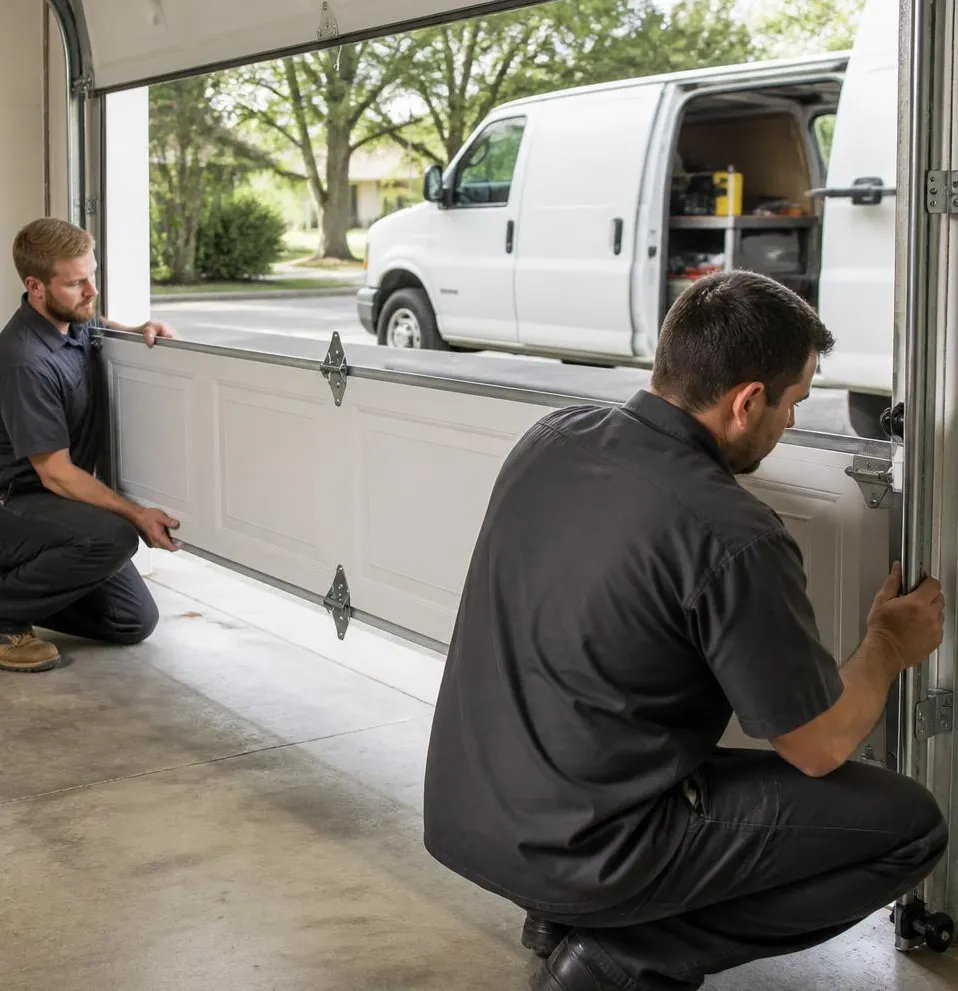
The Mistake Almost Everyone Makes First
You hit the remote, the door doesn't move, so you hit it again. And again. Maybe you walk over and give the bottom panel a shove, or grab a flathead screwdriver to pry at the seam where the door meets the concrete. It's tempting because it feels like the fastest fix—you're already late, it's cold, and the door looks like it's just stuck on something small. But if the bottom seal is actually bonded to the slab with ice, forcing the opener motor repeatedly can strip the gears or burn out the circuit board, and prying with a tool can bend the bottom panel or crack the weatherstripping. The door isn't broken yet. Don't make it broken.
What You'll Notice First
- The door won't lift at all, and you can see a thin line of ice or frost where the rubber seal meets the concrete
- The opener motor runs or hums, but the door doesn't move—or moves an inch and stops
- The door opens, but slower than normal, with grinding or hesitation partway up
- The door reverses on its own partway through the cycle
- Rollers look frosted or the track has a dull white film on it
Any of these point to cold-weather binding rather than a sudden mechanical failure. The good news: most of these have a straightforward fix, provided you check things in the right order instead of guessing.
The Order a Technician Checks Things
1. Ice Bonding at the Bottom Seal
This is the most common culprit after a hard freeze, especially following one of the area's occasional ice storms or a stretch of heavy rain that puddles under the door before temperatures drop. The rubber weatherstripping sits in a thin film of water, the water freezes, and the seal welds itself to the concrete apron. The door isn't mechanically stuck—it's glued down by ice.
The fix: pour warm (not boiling) water along the seal line to break the bond, or run a hair dryer along the base for a few minutes. Once it's loose, gently work the door up by hand before using the opener. Never pry with a crowbar or screwdriver—that cracks the seal and gives water somewhere new to collect next time.
2. Stiff or Gummed-Up Lubricant on Tracks and Rollers
Standard grease thickens in cold temperatures, and if your rollers haven't been lubricated in a while, that thickened grease acts like glue instead of lubrication. This shows up as grinding, hesitation, or a door that labors in short bursts rather than moving smoothly.
The fix: wipe old grease off the tracks and rollers with a clean cloth, then apply a lithium-based or silicone lubricant rated for cold weather. Avoid WD-40 as a long-term lubricant—it displaces moisture short-term but doesn't hold up once temperatures swing back up, which happens often here given how quickly weather shifts between humid stretches and cold snaps.
3. Track Contraction
Metal contracts in cold temperatures, and if your tracks were already slightly out of alignment from humidity-driven rust or age, that contraction can tighten the gap just enough to bind the rollers. This usually shows up as a door that catches at the same spot every time, rather than struggling the whole way.
The fix: a technician checks the gap between roller and track (it should run about 1/8 inch) and adjusts the mounting bolts to restore clearance. This isn't a DIY-friendly step if the track is bolted into the framing tightly—over-tightening or loosening the wrong bolt can throw the whole door off square.
4. Spring Tension Changes
Torsion and extension springs both lose a bit of flexibility in cold weather. A spring that was already near the end of its service life may suddenly feel noticeably weaker once temperatures drop, making the opener strain to lift weight it normally handles with ease. This is often the real reason behind a motor that hums but doesn't lift—the opener isn't broken, it's fighting a spring that can't carry its share of the load anymore.
The fix: a technician checks spring tension by hand and listens for how the door balances when disconnected from the opener. If the spring is simply cold-stiff, it may just need time and use. If it's worn, replacement is the safer call—a failing spring under cold stress is more likely to snap outright.
5. Opener Force Settings
Modern openers sense resistance and reverse the door if it seems to be working too hard—which is exactly what happens when ice, stiff grease, or a tired spring add extra drag. The opener isn't malfunctioning; it's doing its job and reporting a problem elsewhere in the system.
The fix: once the mechanical issues above are resolved, the force and limit settings are rechecked and adjusted if needed. Doing this first, before fixing the real cause, just masks the symptom and risks the door slamming down harder than it should.
6. Worn Weatherstripping
If the bottom seal is cracked or flattened from age, it holds water against the slab more easily, which means repeated freezing each cold snap instead of a one-time issue. Pine debris and moisture buildup around garage door openings in this area can accelerate that wear.
The fix: replace the bottom seal before it becomes a recurring problem every time the temperature drops.
When to Call Greenbrier Garage Door
If your door is freezing to the ground more than once a season, if the opener is straining and reversing, or if you hear new grinding when it's cold, it's worth having it looked at before a spring fails outright. Our garage door maintenance visits cover lubrication, track alignment, and spring tension checks—exactly the sequence above—so the door handles winter without drama. If a spring does need attention, our spring replacement service gets it swapped out safely, since torsion springs are under enough tension to be dangerous without the right tools.
If your garage door in Greenbrier, TN is sticking, groaning, or freezing shut this winter, give Greenbrier Garage Door a call—we'll get it moving smoothly again before the next cold snap.